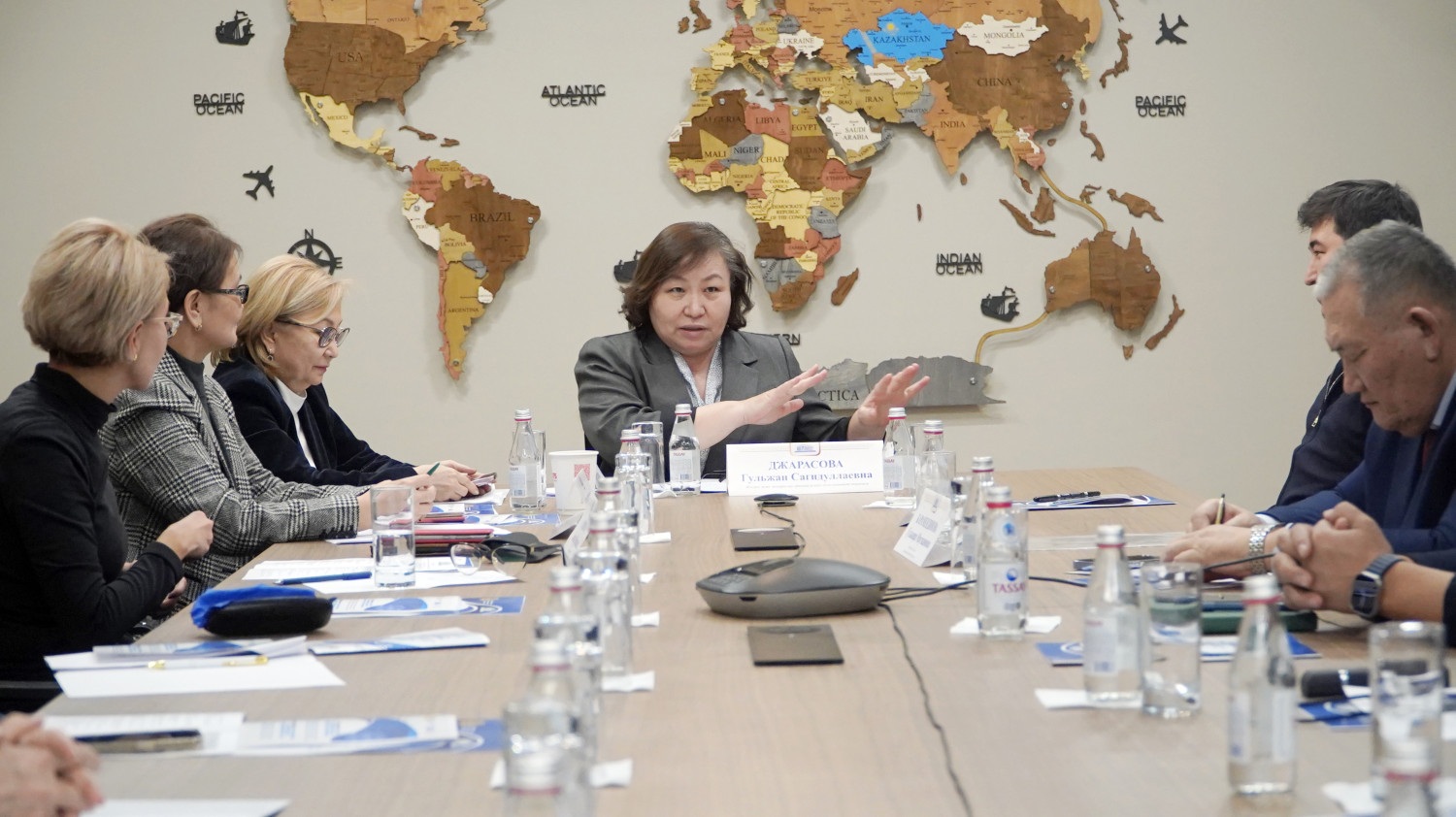
Today, an expanded meeting of the methodological association “Pedagogical Sciences” in the field of education under the Ministry of Science and Higher Education of the Republic of Kazakhstan was held at the Abai Kazakh National Pedagogical University. The event brought together representatives of the I. Altynsarin National Academy of Education, leaders of the country’s leading higher education institutions, stakeholders, representatives of public organizations, and members of the pedagogical community.
The main focus of the meeting was the integration of artificial intelligence into the education system and the development of new approaches to teacher training. The First Vice Minister of Education and Science of the Republic of Kazakhstan, Mayra Meldebekova, delivered an online welcoming speech and officially opened the important meeting.
During the event, the Chairperson of the Committee for Higher and Postgraduate Education of the Ministry of Science and Higher Education of the Republic of Kazakhstan, Gulzhan Dzharasova, spoke about government initiatives aimed at improving the quality of higher education and developing a digital educational ecosystem.
— “President of Kazakhstan Kassym-Jomart Tokayev signed an agreement with the company OpenAI during his visit to the United States. This is the company that created ChatGPT, a modern artificial intelligence tool. Kazakhstan is beginning to implement artificial intelligence technologies across all areas of science, education, and medicine. We have gathered here to discuss plans and objectives in pedagogy. In the era of globalization, strengthening the country’s digital potential should start with educational institutions. For this, educators must be able to effectively use artificial intelligence,” — noted Gulzhan Dzharasova.
Vice-Rector for Academic Affairs of Abai KazNPU, Banu Narbekova, presented a report on new approaches to workforce training in the field of artificial intelligence. Participants discussed issues of digital literacy and the level of technology adoption among students in Kazakhstan, as well as the skills that educators need to develop.
— “It is important to emphasize that artificial intelligence cannot replace a teacher; it should be used as a tool. In the digital era, AI helps ease teachers’ workload and creates opportunities for lesson planning, assessment, and the implementation of creative ideas. As part of specialist training, we conduct a compulsory course titled ‘Fundamentals of Artificial Intelligence’ for all university students,” — emphasized Banu Narbekova.
During the meeting, leading experts in pedagogy discussed new opportunities for artificial intelligence and scientific research, the paradoxes of AI within Kazakhstan’s higher education system, as well as the use of learning analytics and big data.
It is worth noting that prior to the expanded meeting, three panel sessions were held, focusing on new requirements for teacher training in AI, a workshop on artificial intelligence in education, and research interventions in the educational processes of higher education institutions.